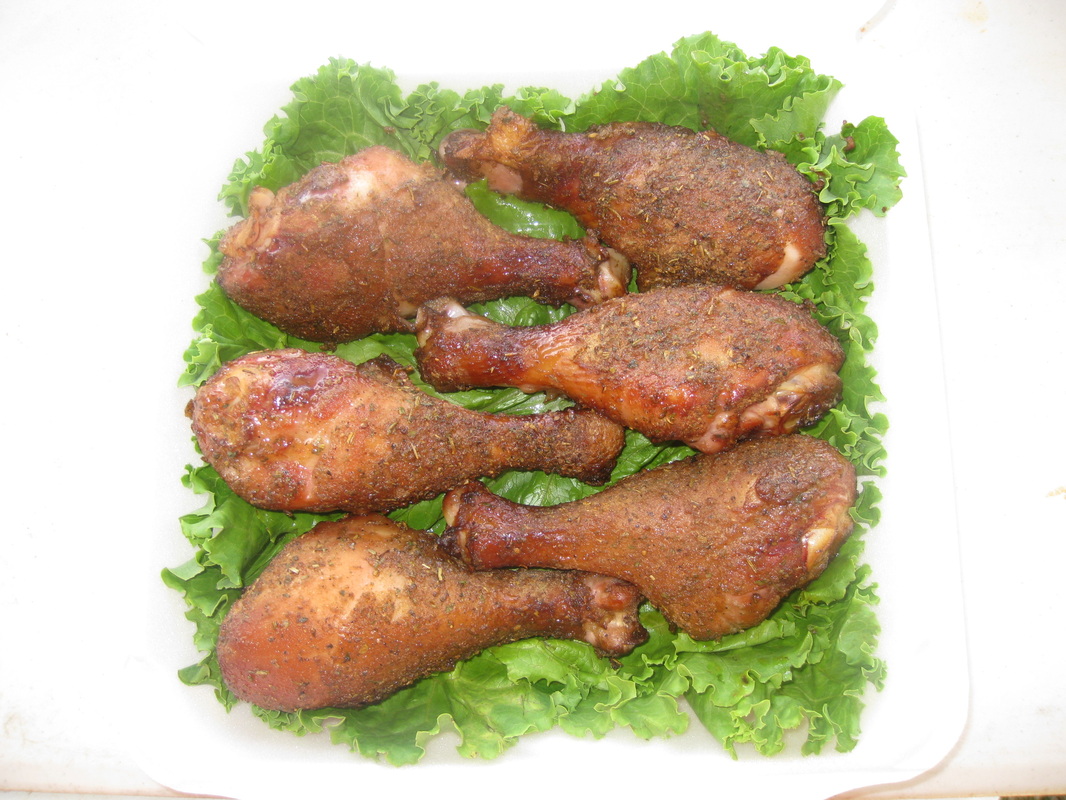
This Chicken recipe is very versatile. It's sweet and flavorful, but not spicy so it appeals to all palates. I make it with chicken wings every year for a charity event, We've won in competition with it on legs, too. You could use it on parts or a whole bird. It works well on the smoker with a fruit wood like apple or peach, but would do just as well on a grill or in the oven.
Ingredients:
2 Tbsp Herbs de Provence
1 tbsp Lavender
1 tbsp Dried sage
¼ cup Garlic powder
¼ cup Onion powder
2 tbsp Sugar
1 tbsp Toasted fennel seeds
1 tbsp Toasted coriander seeds
1 ½ tsp Black pepper
Oil for rubbing on the wings
Agave syrup for glazing
Directions:
Grind each ingredient separately to a soft powder. Combine all the dry ingredients. This will give you a very consistent rub.
Brine the chicken wings for 30 minutes in a standard, unflavored brine. If you aren't going to brine your chicken, add 2 tbsp of salt to the rub.
NOTE: a standard brine mixes 1 cup sugar and 1 cup salt in a gallon of water. A whole chicken should be left in the brine for about 4 hours. Parts or wings can be brined for about an hour.
Dry the chicken and coat with a little oil. Sprinkle on the rub and let sit for 15 minutes at room temperature.
Place chicken on your cooking method of choice (smoker, grill, oven) and cook until chicken reaches 160 degrees.
Brush agave syrup on the chicken and cook an additional 10 minutes. At this point temp the chicken and check the glaze. If you would like it stickier or sweeter, add more agave. Cook the chicken until it reaches 165 degrees.
2 Tbsp Herbs de Provence
1 tbsp Lavender
1 tbsp Dried sage
¼ cup Garlic powder
¼ cup Onion powder
2 tbsp Sugar
1 tbsp Toasted fennel seeds
1 tbsp Toasted coriander seeds
1 ½ tsp Black pepper
Oil for rubbing on the wings
Agave syrup for glazing
Directions:
Grind each ingredient separately to a soft powder. Combine all the dry ingredients. This will give you a very consistent rub.
Brine the chicken wings for 30 minutes in a standard, unflavored brine. If you aren't going to brine your chicken, add 2 tbsp of salt to the rub.
NOTE: a standard brine mixes 1 cup sugar and 1 cup salt in a gallon of water. A whole chicken should be left in the brine for about 4 hours. Parts or wings can be brined for about an hour.
Dry the chicken and coat with a little oil. Sprinkle on the rub and let sit for 15 minutes at room temperature.
Place chicken on your cooking method of choice (smoker, grill, oven) and cook until chicken reaches 160 degrees.
Brush agave syrup on the chicken and cook an additional 10 minutes. At this point temp the chicken and check the glaze. If you would like it stickier or sweeter, add more agave. Cook the chicken until it reaches 165 degrees.
 RSS Feed